When it is understood that one loses joy and happiness in the attempt to possess them, the essence of natural farming will be realized. The ultimate goal of farming is not the growing of crops, but the cultivation and perfection of human beings.
Growing our own food without the use of chemicals or machinery is one of the healthiest things we can do. Not only is the produce much higher in nutritional value and free of toxicants and genetic modification, but the connection with the earth through the work itself is therapeutic, both physically and mentally. And while we're getting functional exercise and sweating out toxins in the sun, we run into billions of bacteria that bolster our immune systems. Gardening is the work-out extraordinaire for mind, body, and soul.
There are many approaches to small-scale agriculture. My own follows permaculture principles which are derived from observing how plants and animals organize and coexist in the wild. For example, nature’s gardens are incredibly diverse with countless species of organisms cohabiting an unfathomably complex web of life. This diversity provides symbiosis and a system of checks and balances not found in monocultured factory farms. Permaculture gardens emulate natural ecosystems by factoring in considerations like micro-climates, soil conditions, biological mutualism, and water catchment.
The heavy work in developing a new garden is mostly in the first year when the plan is created based upon what the grower wants to grow and how to best use the site and conditions. Year one also typically entails the removal (or cover) of existing vegetation, conditioning of the subsoil, and the import and spreading of soil, compost, and mulch. Next come planting and sowing seed, attendant maintenance, and then, the harvest! (which actually happens in succession from spring to fall, or longer depending on your location and methods). Finally, turning the crops in in the late fall helps prepare for the following spring by adding more organic matter to the soil.
care and maintenance
It is commonly believed that the maintenance of even a small garden requires a lot of time and labor. I have not found this to be the case, probably because permaculture methods enable nature to do the heavy lifting. For example, simple things such as proper plant spacing and a deep mulch will do incredible things for your garden: cool the soil; retain moisture; harbor beneficial insects, earthworms, and microbes; and suppress nearly all weeds. A well-planned/installed garden only requires about an hour per week to maintain once it is established. Personally, I find this to be about the most rewarding, relaxing, and beneficial work I've ever done, so to me it is not "work" at all. And the supply of freshly harvested produce, direct from garden to plate at minimal cost, makes it all that much sweeter.
getting started
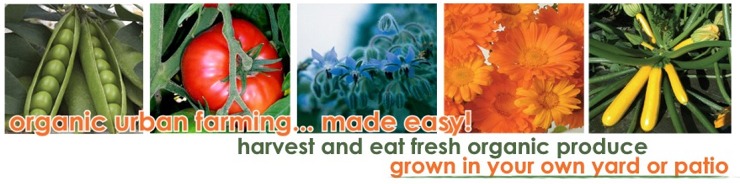
Virtually anyone can grow at least a bit of their own food if they want to. All that's needed is a bit of land just a few square feet in area. If that's not available, a few large pots on a patio or in a sunny room will suffice to grow an assortment of vegetables and herbs for cooking, teas, and medicinal uses.
| Books, Videos, Websites & Articles | |||
 |
Excellent resource for organic farming, soil to seed to harvest |
||
|
|
|||
|
|
|||
 |
Foundational information on natural farming |
||
|
|
|||
|
|
|||
 |
Self-Sufficiency on 1/4 Acre |
||
|
|
|||
|
|
|||
 |
Organic Vegetables from Your Home Garden All Year Long |
||
Back to Eden
documentary on a phenomenal garden transformation
great channel from a 4 season backyard gardener
Articles
suppliers
organic seeds, garden supplies, and more
coming soon!
__________________________________________________________________________________________
More information and resources on starting and maintaining
your own organic garden can be found at
If you're interested in creating a garden to produce some of your own organic food at very low cost and would like assistance, I can help with: planning, soil conditioning, planting/sowing, seed starts, mulching, irrigation systems, and the construction of raised beds and structures. I will also pass along cultivation knowledge that you can apply in the following seasons. Feel free to contact me with any questions on this subject; I'm happy to share what I've learned on this journey... so far.
Subscribe to receive latest posts (2-4 per month). Your email address is never shared and you can unsubscribe at any time.
Feedback, content requests, and shares are appreciated. I'm also interested in creative collaboration projects.